 ×
×
When evaluating a faucet for heavy everyday commercial environments, reliability becomes the primary concern. A faucet operating in a busy restaurant, hotel kitchen, or industrial facility faces demands far exceeding what typical residential use environments impose. The difference between a standard faucet failing after a few years and one lasting a decade hinges on three critical structural and material factors that directly influence performance under relentless operational stress.
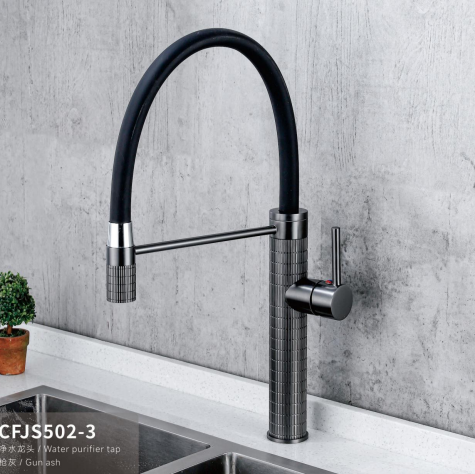
Understanding these reliability determinants helps facility managers, procurement specialists, and business owners make informed decisions when selecting equipment for commercial-grade applications. The stakes are high because downtime, repair costs, and safety concerns multiply when essential fixtures fail in high-traffic commercial settings. This guide breaks down the engineering and material science behind faucet longevity in demanding commercial use scenarios.
The foundation of any reliable commercial grade faucet lies in its valve body construction. Industrial-grade faucets typically use brass or reinforced stainless steel valve bodies, which resist corrosion, mineral buildup, and mechanical wear far better than cheaper alloys or plastic composites used in residential use models. Brass naturally inhibits bacterial growth and maintains structural integrity even when exposed to aggressive water chemistry or high-temperature cycles common in commercial kitchens.
Commercial use environments demand internal components engineered to withstand millions of on-off cycles. Cartridge mechanisms, springs, and seals in commercial grade faucets employ industrial-grade elastomers and precision-machined seats that maintain watertight performance even after extended heavy operation. Residential use faucets often feature simpler internal designs that deteriorate rapidly under the pressure and frequency demands of commercial kitchens, laundry facilities, or healthcare settings where water is accessed continuously throughout operating hours.
The spout aerator and handle assembly experience constant physical stress in commercial use applications. Premium commercial grade faucets feature solid construction throughout, eliminating weak points where components can fracture or separate under thermal stress and repeated impact. The handle mechanism incorporates reinforced pivots and bushings designed to prevent loosening or play that degrades performance over time.
Compared to typical residential use fixtures, commercial grade spouts are thicker-walled and feature tighter aerator screens that resist clogging while maintaining consistent flow rates. This durability difference becomes apparent within months of commercial installation, as budget faucets begin showing signs of wear, leaks, or reduced performance that would require immediate replacement in a professional kitchen environment.
Commercial use settings present unpredictable water pressure patterns that would overwhelm residential use faucets designed for stable, low-demand conditions. Fluctuating pressure from multiple simultaneous water draws in a restaurant, hospital, or manufacturing facility creates hydraulic stresses that test valve integrity constantly. Commercial grade faucets incorporate pressure-balancing cartridges and flow restrictors engineered to maintain stable output regardless of upstream pressure swings.
The difference becomes critical when facility managers must rely on consistent water delivery for operational workflows. A well-engineered commercial grade faucet maintains predictable flow characteristics even during peak usage periods when incoming pressure may fluctuate dramatically. Residential use models typically lack this engineering sophistication, resulting in sudden surges or drops that interrupt workflows, waste water, or create temperature control problems in commercial kitchens where precision matters.
Commercial use environments often require rapid alternation between hot and cold water draws throughout the day. Commercial grade thermostatic mixing valves prevent scalding accidents while maintaining precise temperature outputs that residential use faucets cannot reliably deliver. The thermal cycling that occurs in busy commercial kitchens stresses elastomer seals and internal diaphragms far beyond what standard faucets are designed to endure.
A commercial grade faucet's mixing capability maintains stability across thousands of daily temperature transitions, whereas residential use faucets frequently develop erratic temperature behavior, delayed response times, or eventually fail to maintain consistent mixing as internal components degrade. This reliability difference directly impacts worker safety and operational consistency in healthcare, hospitality, and food service applications where water temperature control is non-negotiable.
Commercial grade faucet design anticipates the reality that maintenance will occur frequently in high-use environments. Critical components like cartridges, seals, and aerators are engineered for quick replacement without complete fixture removal or specialized tools. This accessibility directly reduces downtime when problems inevitably arise in commercial use settings where waiting for a plumber or extended repairs disrupts critical operations.
Residential use faucets often feature proprietary or sealed designs that make field repairs difficult or impossible, forcing complete replacement when wear occurs. Commercial grade fixtures prioritize modular design philosophy, allowing trained maintenance staff to address issues within minutes rather than hours. For facilities operating continuously, this design consideration translates into measurable cost savings and operational resilience that justify the higher initial investment in commercial grade equipment.
Reliable commercial grade faucet manufacturers maintain comprehensive spare parts inventories and extended warranty programs recognizing that downtime carries genuine business costs in commercial use environments. Residential use product lines typically offer limited parts availability and shorter warranty periods reflecting their design for lower-stress applications. A commercial facility manager can order replacement cartridges, seals, or aerators confidently knowing stock will remain available for years, supporting long-term operational planning.
This parts ecosystem difference represents a hidden but crucial reliability factor. A commercial grade faucet selected today will likely remain serviceable and fully supported a decade later, whereas residential use models often become orphaned within five years as manufacturers discontinue product lines or cease parts production. For facilities requiring multi-year operational continuity, commercial grade choices eliminate the risk of forced replacement when failures occur.
Commercial grade faucets feature heavier-gauge materials, precision-engineered internal components, and pressure-balancing systems designed to withstand millions of cycles and variable water conditions. Residential use faucets employ simpler designs optimized for lower volume, stable conditions found in typical homes. The material thickness, valve mechanism sophistication, and thermal management capabilities distinguish commercial grade fixtures from their residential use counterparts, translating directly into years of additional reliable operation under heavy commercial use.
Commercial grade faucets typically require periodic cartridge cleaning or aerator maintenance every 6-12 months depending on water quality, whereas residential use faucets may need replacement rather than repair when problems emerge. However, well-maintained commercial grade equipment runs reliably for 10-15 years minimum, whereas residential use faucets often require replacement or major repair within 3-5 years under commercial use conditions. The maintenance investment required for commercial grade fixtures remains far smaller than the replacement frequency of inappropriate residential use models.
Residential use faucets should not be installed in commercial use environments where they will encounter sustained high-volume use, temperature cycling, or variable pressure conditions beyond their engineering specifications. Failures occur rapidly, often within months, creating liability risks, operational disruptions, and ultimately higher total cost of ownership despite lower initial purchase price. Building codes and health department regulations in many jurisdictions mandate commercial grade fixtures for food service and healthcare applications, making the choice both practical and legally necessary.

 EN
EN